Laugavegur Trail Packing List
| All, Travel Guide, highlands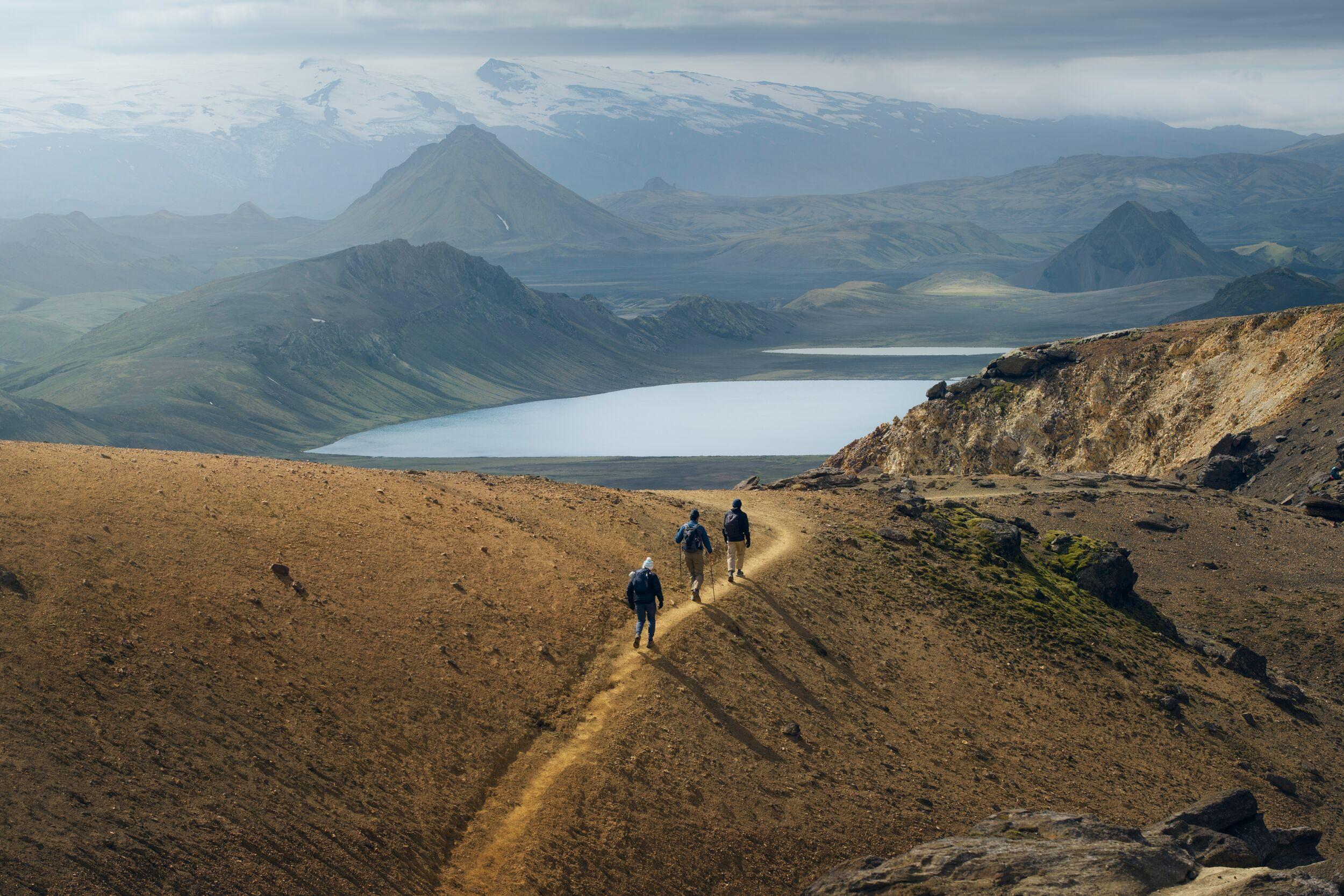
An Introduction to Hiking the Laugavegur Trail
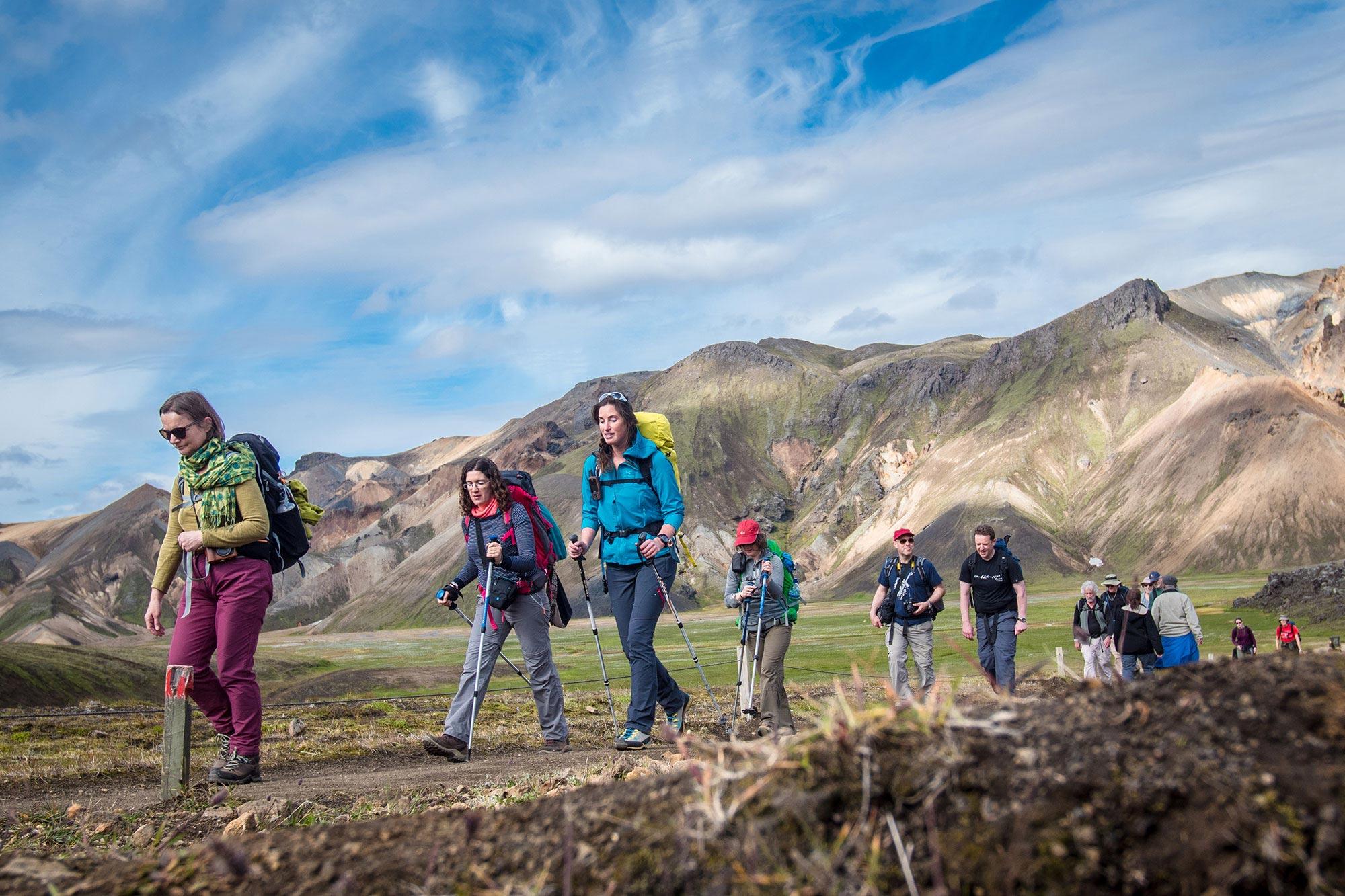
The Laugavegur trail is Iceland’s most famous multi-day hike, connecting the geothermal landscapes of Landmannalaugar with the green valleys of Þórsmörk. It passes through rhyolite mountains, volcanic deserts, glacier-fed rivers and black sand plains, offering constant changes in terrain and weather.
For many hikers, preparation is what makes the experience enjoyable rather than overwhelming. A well-planned Laugavegur hiking packing list is not just about comfort; it’s about safety, resilience and confidence in Iceland’s remote highland conditions.
Understanding what gear one should bring along to trek Laugavegurinn is the first step in preparing properly. The answer depends on season, route variation and whether you are travelling independently or with the experts at Icelandic Mountain Guides.
When packing, it’s good to keep in mind that conditions can shift within minutes along the Laugavegur trail. Sun, rain, wind and even snow are all possible in a single day. That unpredictability is exactly what makes the route memorable, but it also makes preparation essential.

Understanding your kit is what allows the landscape to take centre stage.
What You Need to Know Before Packing
Before diving into your kit, it’s important to understand the environment you’ll be experiencing.
The Laugavegur route is a multi-day highland trek with limited infrastructure. Mountain huts are spaced out along the trail, but services are minimal. Weather can include high winds, sudden rain and cold nights — yes, even in summer.
River crossings are part of the experience, especially between Álftavatn and Emstrur. Conditions vary daily, which means flexibility in clothing and equipment matters more than technical complexity.
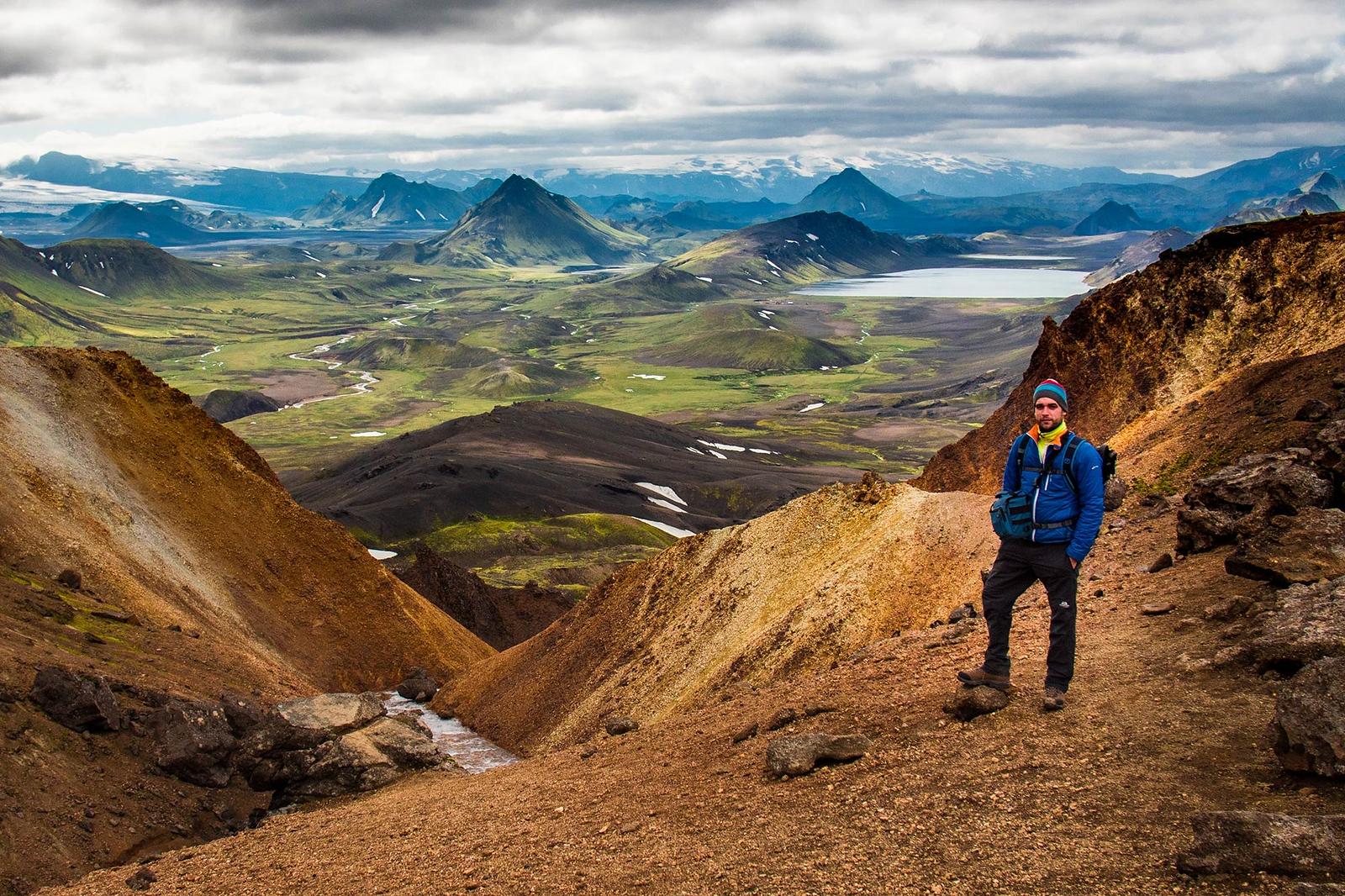
When considering what clothing, gear and extras to add to your Laugavegur trail pack, the key principles to remember are layering and adaptability. Nothing should be unnecessary, and everything should have a purpose.
Essential Clothing for the Laugavegur Trail
Base Layers
Base layers are the foundation of your system. Merino wool is ideal because it regulates temperature and manages moisture effectively, drawing it away from your skin. You will want to pack at least two full base layer sets to wear on rotation over the course of the hike.
Insulation Layers
Mid-layers provide warmth during breaks and along colder sections of the trail. A fleece or lightweight down jacket works well as an extra warm layer for evenings and on exposed ridges.
Waterproof Outer Layers
A fully waterproof jacket and trousers are non-negotiable. Icelandic weather changes quickly, and staying warm often depends on staying dry.
Wind resistance is equally important. On exposed ridges, strong wind can significantly reduce body temperature even in mild conditions.
Hiking Trousers and Shorts
Lightweight, quick-drying hiking pants are ideal. Some hikers bring shorts for when the sun comes out and the mercury rises, but flexibility is key.
A solid Laugavegur hiking packing list always prioritises durable, weather-resistant lower-body layers.
You won’t regret prioritising clothing that performs on its own and as part of a layered systems.
Footwear and Socks
Hiking Boots
Waterproof hiking boots with ankle support are essential. The terrain is uneven, volcanic and often wet. Be sure to break in your boots well before embarking on your Laugavegur trek. Nothing ruins a hike faster than a blister!
Camp Shoes
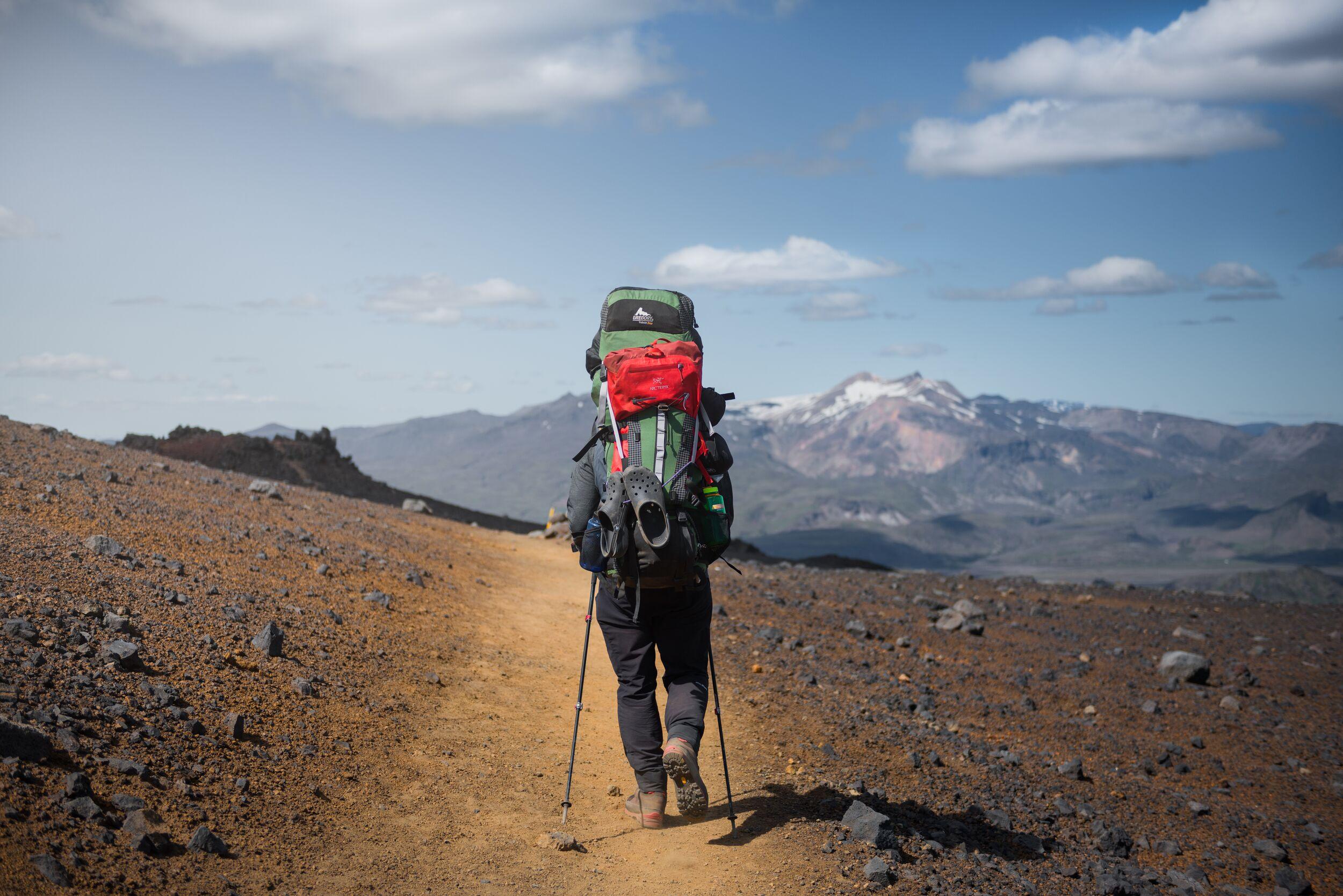
Lightweight camp shoes or sandals provide relief at huts and river crossings. It’ll feel great to put your feet up and wiggle your toes at camp after a day on the trail.
Socks and Foot Care
Wool socks (ideally merino wool) help regulate temperature and reduce blister risk. Bring multiple pairs for rotation and drying.
Foot care is often overlooked but critical for a successful Laugavegur trail experience.
Backpack and Storage
Backpack Size and Fit
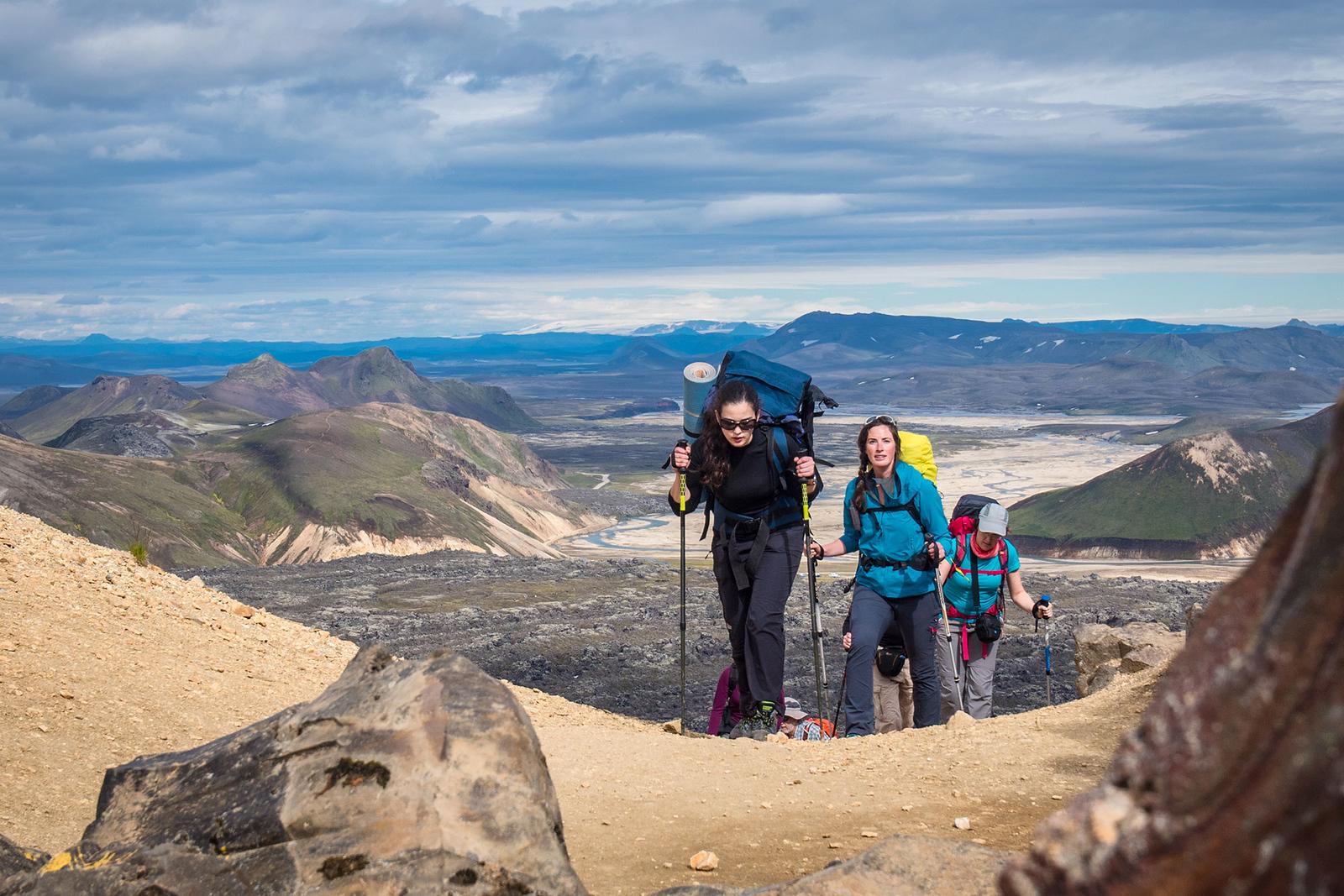
A 40 to 60 litre pack is typical for hut-based hikers. The fit of your pack is more important than volume, so bring one that you’re comfortable wearing for long stretches and that is fitted to your frame and distributes weight comfortably across your hips and shoulders.
Dry Bags and Organisation
Dry bags are essential for Iceland’s wet conditions. A pack cover adds extra protection, but internal waterproofing is more reliable.
Organised packing reduces time spent searching in wind and rain.
Sleeping Gear
If you are travelling with Icelandic Mountain Guides, mountain hut accommodation is typically included, reducing the need for full camping systems. Still, there are some night-time essentials you’ll need to bring along.
Sleeping Bag
A warm sleeping bag rated for low temperatures is a required piece of kit. Even in huts, nights can be cold.
Sleeping Mat
If you are camping along the trail, a quality sleeping pad is essential for insulation and comfort.
Food and Cooking Equipment
Meals and Snacks
Energy-dense snacks are vital. Nuts, dried fruit, chocolate and electrolytes will do wonders maintaining your energy levels across long days of hiking.
Stove and Fuel
If hitting the Laugavegur trail solo, a lightweight stove system is necessary. Conditions can make cooking challenging in wind, so efficiency matters. If trekking with Icelandic Mountain Guides, most meals are all part and parcel of the experience.
Water and Filtration
Water is generally available from streams, but a water filter or purification system adds security, especially along busy sections of the trail.
Hydration is key!
Navigation and Safety Equipment
Being one of the world’s top hiking routes, the Laugavegur trail is well marked during the summer hiking season. Still, weather can reduce visibility. A GPS device or offline map is recommended for those tacking the trail without an experienced guide.
First Aid & Safety
A compact kit should include blister care, bandages and basic medication.
Unless you’re hiking at the height of the summer solstice, you may be lacing up your hiking boots for the day before the sun rises. For those early mornings, a headlamp (and extra batteries) are a nice piece of equipment to have on hand.
Optional But Useful Items
Trekking Poles
Trekking poles reduce strain on knees and help during river crossings. They are especially useful in uneven terrain.
Camera and Power Banks
The landscape is highly photogenic, but cold conditions drain batteries quickly.
Personal Comfort Items
A neck gaiter, light gloves or ear protection can significantly improve comfort in high winds.
What Not to Bring
Experienced trekkers will know how big a strain an over-packed pack can put on a hike. So when heading out to embrace the beauty of Laugavegur, avoid overpacking. Heavy or unnecessary items slow you down and reduce enjoyment.
Do not bring:
- Cotton clothing
- Excess footwear
- Large toiletries
- Unnecessary electronics
- Heavy books or non-essential gear
The best Laugavegur hiking packing list is minimal, functional and weather-ready.
Ask yourself what you actually need and remove anything from your pack that does not serve the trail environment.
Quick Tips for Packing for Multi-Day Hiking
Whether you’re hitting the Laugavegur trail or another National Geographic approved top-20 hikes in the world, you’ll want to pack for flexibility. Weather changes quickly, so accessible layers matter more than perfect organisation.
- Keep waterproofs on top
- Store insulation layers mid-pack
- Keep snacks and essentials easily accessible
- Protect electronics in dry bags
- Always secure loose items in wind
Packing for a multi-day hike in Iceland is about managing change rather than predicting conditions.
Guided Treks on the Laugavegur Trail with Mountain Guides
Travelling with Icelandic Mountain Guides provides structure and support in a remote environment.
Guides assist with:
- Route navigation
- River crossings
- Weather decisions
- Group safety management
- Local insight into geology and landscape
Small group sizes ensure a focused experience and reduce logistical complexity. This is especially valuable in unpredictable weather where decisions need to be made quickly and confidently.
If you are unsure about logistics, reviewing options such as the or can help clarify the level of independence you want.
Guided Laugavegur Treks with Mountain Guides
Laugavegur Trek Classic (Huts)
4-Day Laugavegur Trek (Huts)
Laugavegur Trail - Self Guided
Laugavegur & Fimmvörðuháls Combo Tour
Final Thoughts
A well-prepared Laugavegur hiking packing list is the foundation of a successful highland journey. Conditions on the Laugavegur trail are dynamic, so your preparation will directly influence your comfort and safety.
When wondering what gear your should bring on a Laugavegurinn trek, the answer is simple: layered clothing, reliable waterproofs and practical equipment suited for remote terrains.
With the right preparation, the trail becomes less about managing conditions and more about experiencing one of Iceland’s most varied and rewarding landscapes. It is a journey defined by contrast, resilience and quiet moments in vast open terrain.
Understanding your kit is what allows the landscape to take centre stage.
Frequently Asked Questions
What size pack for Laugavegur Trail?
For the Laugavegur trail, most hikers use a 40–60 litre backpack depending on whether they are carrying full backpacking gear or staying in huts.
If you are on a guided or hut-based itinerary, a smaller 40–50L pack is often enough for clothing, food, and daily essentials. If you are carrying more equipment or joining a self-supported trip, closer to 55–60L provides better flexibility.
Fit is more important than capacity — your pack should sit comfortably on your hips and allow for stable movement over uneven terrain.
What is the 20% rule for backpacking?
The 20% rule is a simple guideline suggesting your pack weight should not exceed 20% of your body weight for multi-day hiking. For example, a 75 kg hiker should aim for a pack around 15 kg or less. On the Laugavegur trail, this becomes especially important due to uneven ground, river crossings, and changing weather conditions.
Keeping weight down helps reduce fatigue and improves balance in wind and on descents. It’s a useful benchmark, but comfort and fitness level should also be taken into account.
How to pack a backpack for a trek?
Efficient packing is about balance, accessibility and protection from weather. Heavier items should sit close to your back and centred to improve stability, while lighter layers can go at the top or bottom of the pack. Frequently used items — such as a waterproof jacket, snacks, or a map — should be easy to reach without unpacking everything.
Use dry bags or liners to protect gear from rain and river spray, and keep clothing organised by category. On exposed trails like Laugavegur, good packing helps you stay comfortable and respond quickly to changing conditions.
How heavy should a 3-day hiking pack be?
For a 3-day trek, a typical pack weight ranges between 10 to 15 kg (22 to 33 lbs), depending on season, route and whether you are staying in huts or camping. Hut-based trips are usually lighter because you don’t need to carry a tent or full cooking system. On the Laugavegur trail, weather protection, food, and safety gear make up most of the weight.
A lighter pack improves comfort significantly on long days with climbs, river crossings, and exposure to wind. As a general rule, if your pack feels heavy at the start, it will feel much heavier by the end of day three.
Keep me informed about the Icelandic Mountain Guides Blog
Outdoor adventure in Iceland is our specialty. Subscribe to our free monthly newsletter to learn when to go, what to do and where to have the best adventures in Iceland.
Related Blog Posts
Related Tours
Laugavegur Trek Classic (Huts)
4-Day Laugavegur Trek (Huts)
Laugavegur Trail - Self Guided