Icelandic Names and the Stories Hidden in the Landscape
| All, CULTURE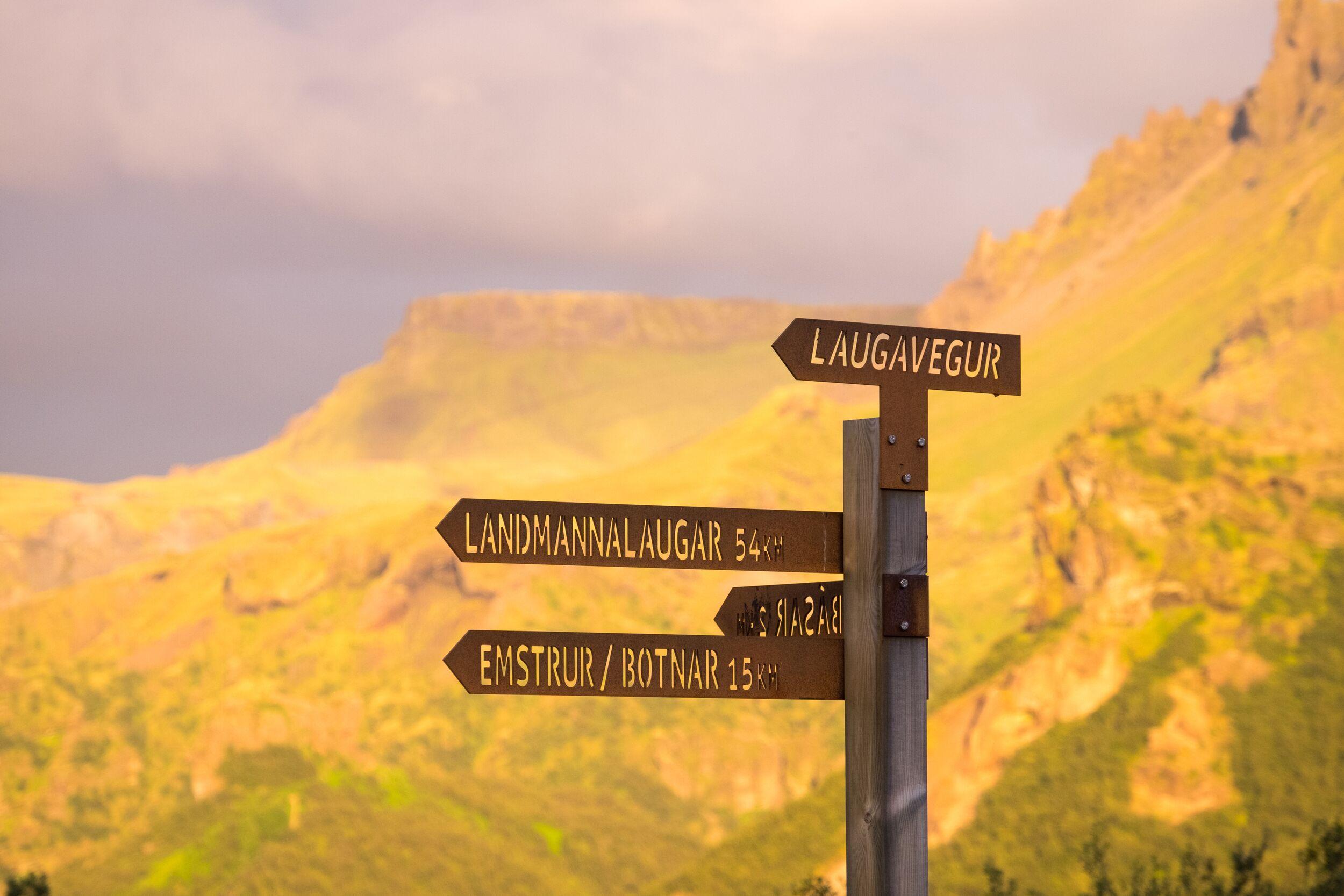
When travelling around Iceland, you quickly learn that the landscape has a lot to say.
A glacier can tell you what lies beneath it. A valley might reveal who once lived there. A river can carry a name connected to an old story, a physical feature or an event that happened centuries ago.
For visitors, Icelandic place names can look intimidating at first glance. Words like Eyjafjallajökull, Fimmvörðuháls and Hrafntinnusker don’t exactly roll off the tongue of non-Icelandic speakers.
But look a little closer, break them down into their basic parts, and they become much easier to understand.
That’s actually a really fun feature of Icelandic place names — many are descriptive combinations of smaller words. Learning a few of those words can give you a useful key to reading the landscape. More importantly, the names reveal how generations of Icelanders observed, understood and remembered the places around them.
That makes Iceland names more than labels on a map. They are small records of the relationship between people and the land.

That makes Iceland names more than labels on a map. They are small records of the relationship between people and the land.
A Short Detour into Icelandic Personal Names
Before looking at place names, it is worth understanding something about Icelandic names in general.
Iceland has a distinctive naming tradition. Family surnames passed down through generations are uncommon. Instead, a person's surname will generally be based on a parent's given name, with either -son (son) or -dóttir (daughter) tacked onto the end. That means that parents and children likely won’t share a surname, and even siblings can have different surnames.
Iceland also boasts an official Personal Names Register, which is essentially a list of approved Icelandic names that parents can choose from. If parents want to give a child a name that is not already on the register, they’ll need to apply after their little bundle of joy is born — but they’ll have to prove that the name works within Icelandic grammar rules, has some precedent in local naming tradition and won’t be a beacon for teasing as their child navigates life.
If you come from a place where children are given a name as soon as they open their eyes, the thought of waiting in limbo for your chosen name to get green-lit might seem strange, but Icelandic parents have up to six months to name their children, and many take that time to get to know their little human’s personality and choosing a name that fits.
The wider point is that Icelandic naming remains closely connected to language and tradition. The same is true when you start looking at Iceland place names.
How Early Icelanders Named the Landscape
Imagine arriving somewhere for the first time with no road signs, maps or GPS. How would you describe the places around you?
You might start with what you could see. A mountain could be named for its colour or shape. A valley might be associated with a person or activity. A bay could be named after something unusual that appeared there.
This practical approach is visible throughout Icelandic geographical names.
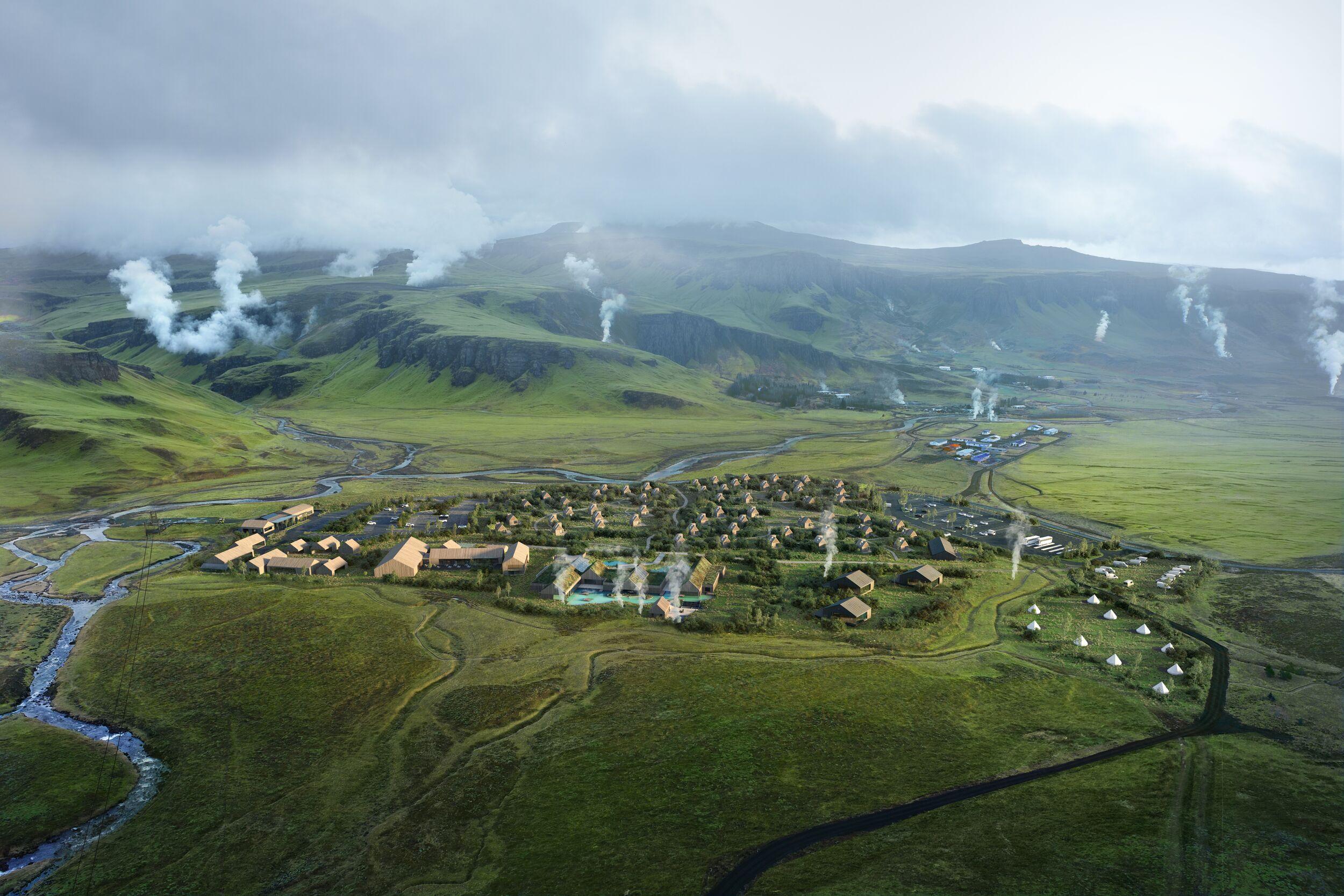
Take Reykjavík. The name means “Smoky Bay”. As for how it got that name, the story goes that Ingólfur Arnarson, regarded as Iceland's first settler, saw steam rising from geothermal areas when he arrived in the area around 870. The name reflected what he could see: a bay that appeared smoky because of geothermal activity.
It is a perfect example of how Icelandic landscape names work. The name describes something about the place, but it also preserves a moment of observation.
The same principle made practical sense in a landscape where knowing your surroundings mattered. A descriptive name could help people identify a particular river, valley, mountain or crossing point without needing a modern map.
Over time, those descriptions became part of the country's cultural memory.
When Names Record History, Myth and Folklore
Not every Icelandic place name is a simple description of the local geology.
Some names record what happened there. Others are connected to people, religion, mythology or folklore.
Þingvellir is a particularly clear example. The name can be understood as “Parliament Plains” or “assembly fields”. In 930, Iceland's Alþingi was established there, making the location central to the country's early political history. The name therefore tells you something important about the place's function.
Even within Þingvellir, the landscape contains hundreds of place names. The national park notes that more than 800 names can be found within the park, with some connected to the historic assembly and old travel routes.
Other names carry stories that sit somewhere between history and tradition.
In the north of Iceland, Goðafoss, or “Waterfall of the Gods”, is traditionally associated with the conversion of Iceland to Christianity. According to the well-known story, Þorgeir Ljósvetningagoði threw his pagan idols into the waterfall after the Alþingi decided that Iceland should adopt Christianity.
Whether you encounter a name through a history book or while standing beside the feature itself, the effect is the same: the landscape becomes part of the story.
That is one of the pleasures of learning Iceland names. You begin to notice that the map is not just showing you where things are. It is telling you why people remembered them.
Reading Iceland's Famous Hiking Landscapes
Once you understand a few common words, some of Iceland's most famous hiking destinations become surprisingly straightforward.
Eyjafjallajökull
Eyjafjallajökull may look like an indecipherable mouthful, but the word can be broken down into smaller bites.
Eyja relates to “islands”, fjalla means “of mountains”, and jökull means glacier. Put together, the name refers to the glacier of the island mountains.
It is a useful reminder that many Icelandic glacier names contain information about the landscape beneath or around the ice.
Fimmvörðuháls
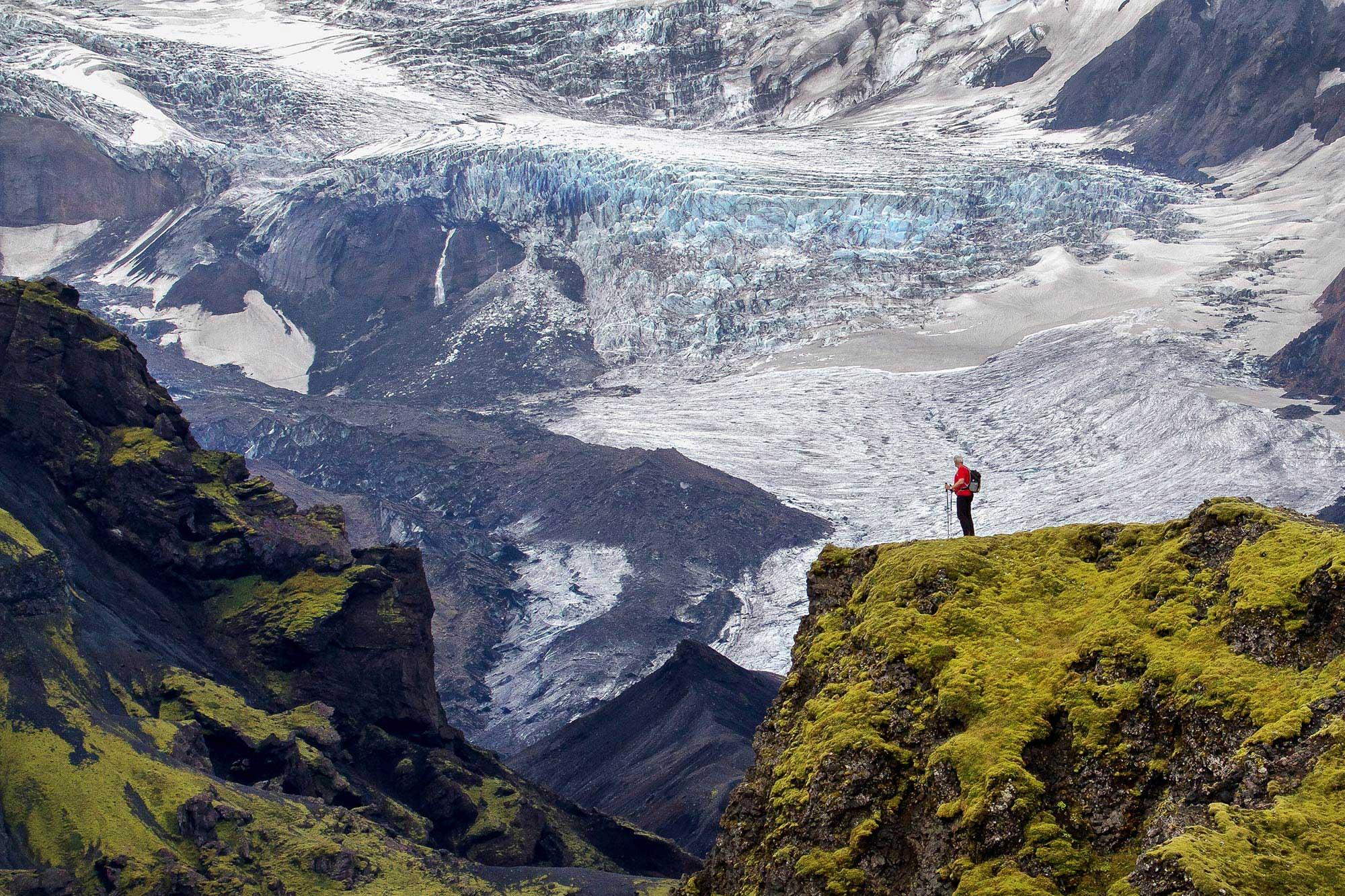
Fimmvörðuháls is a mountain pass between Eyjafjallajökull and Mýrdalsjökull.
The name is traditionally connected with five cairns or landmarks along the route. The exact historical interpretation is more nuanced than simply translating each word, but the name reflects the importance of identifiable markers in a remote landscape.
Today, the Fimmvörðuháls route is one of Iceland's classic hiking areas, linking the landscapes around Þórsmörk and Skógar.
Hrafntinnusker
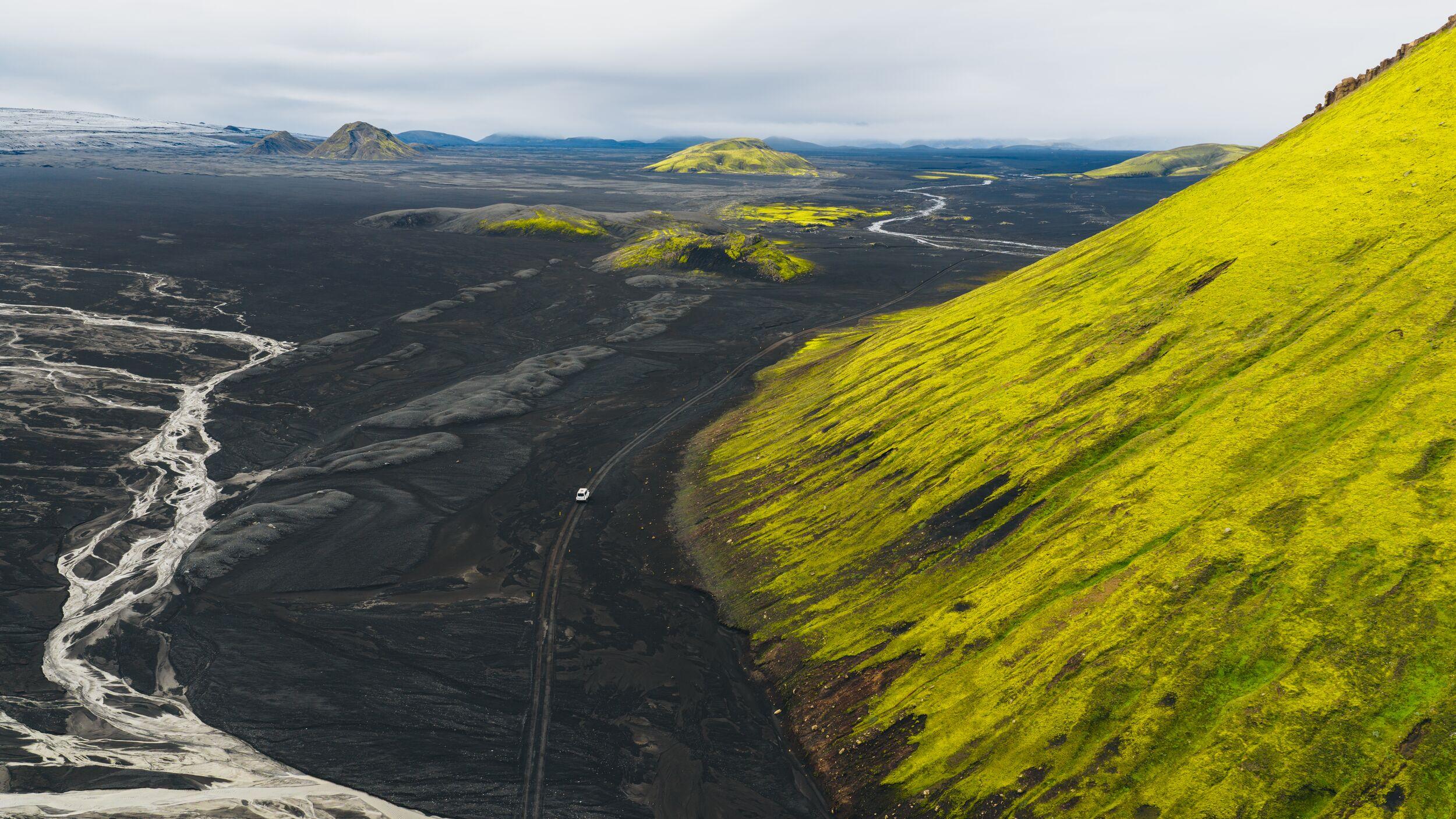
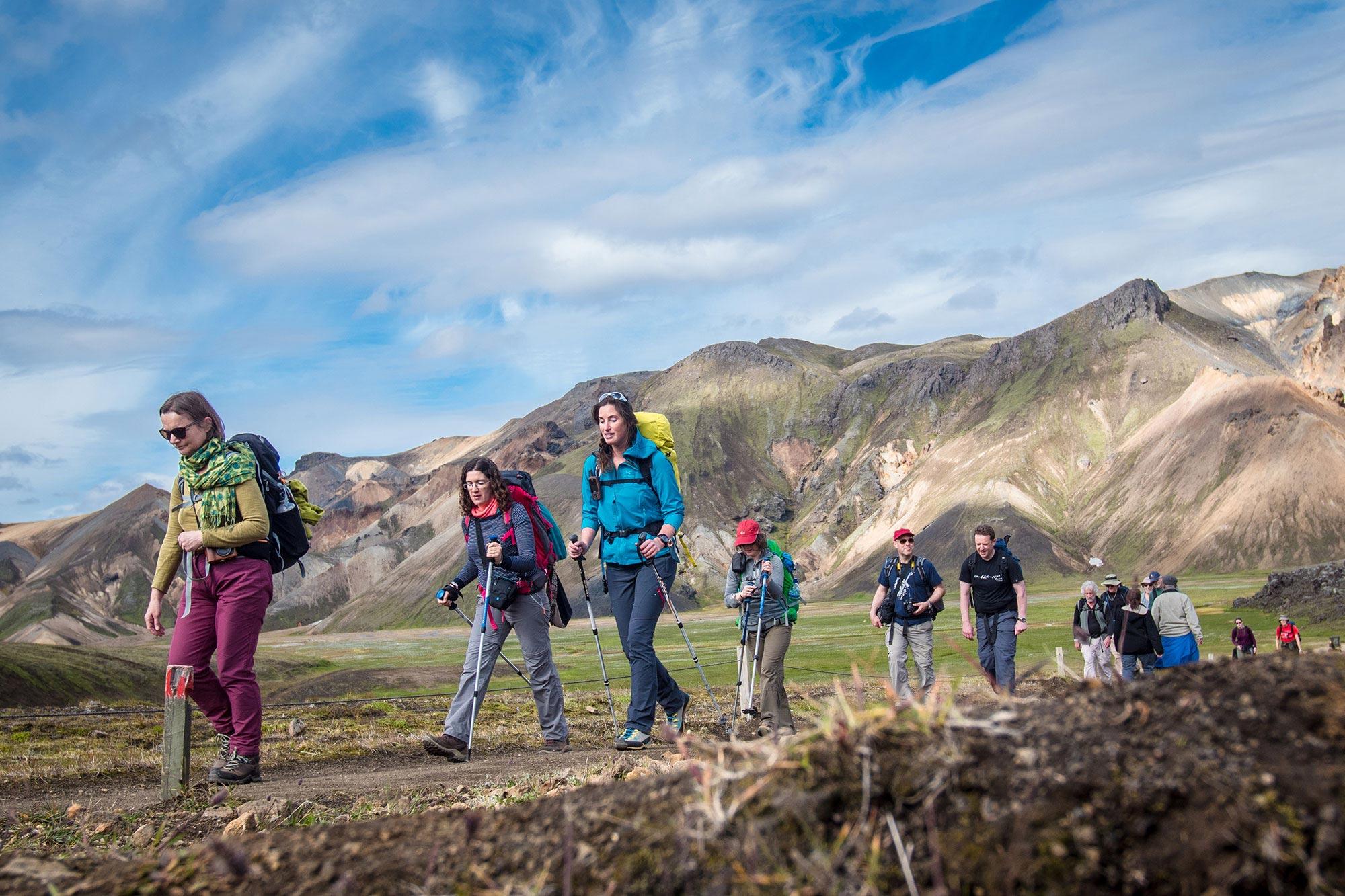
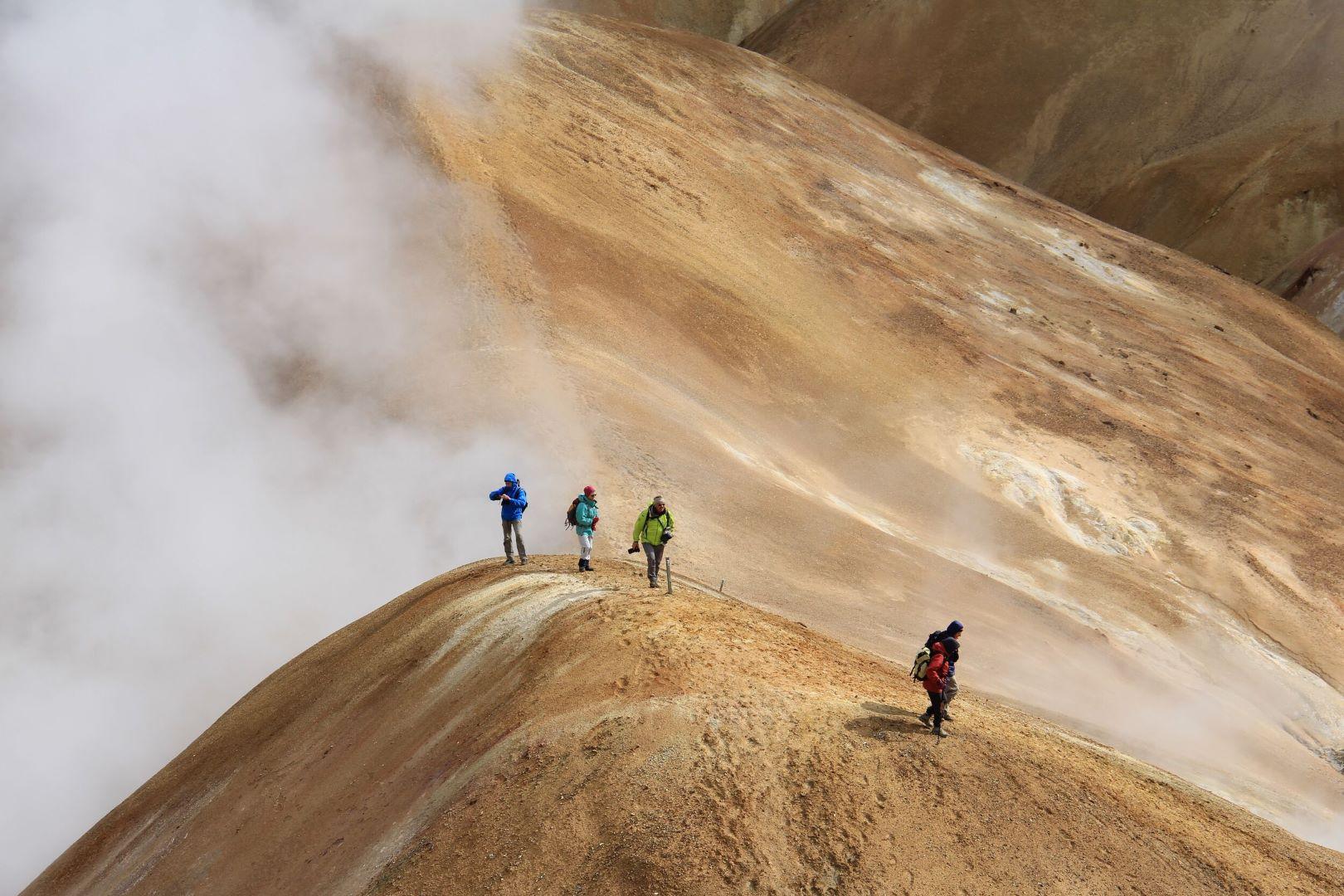
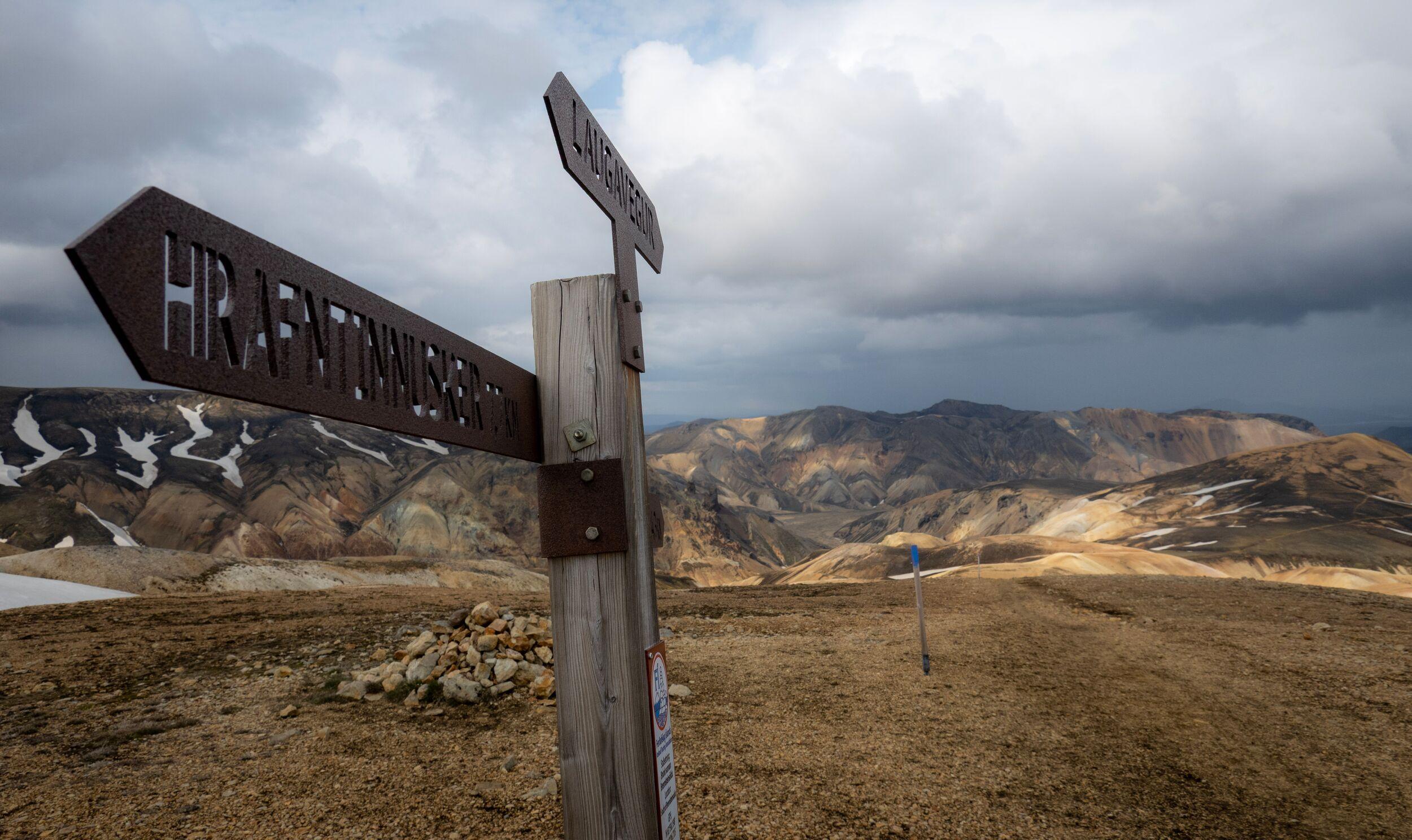
A mountain along the classic Laugavegur Trail, Hrafntinnusker is a wonderful example of a name that tells you what you might expect to find.
Hrafntinna means “obsidian”, while sker refers to a skerry, rocky outcrop or reef-like feature. Obsidian is volcanic glass, and the dark volcanic terrain around Hrafntinnusker gives the name immediate context.
When hiking through this part of the Highlands, the name starts to feel less like a complicated word and more like a field note left by earlier travellers.
Landmannalaugar
Landmannalaugar is one of the best-known hiking destinations in the Iceland Highlands. The name is commonly understood as “the people's pools” or “the pools of the people”.
Landmaður refers to a person associated with the land or country, while laug means a warm pool or bathing pool.
That makes sense when you experience the area's geothermal activity and hot springs. The name points towards something practical: this is a place historically associated with bathing and warm water — which would be extra enticing if traversing the area on skis during the winter.
Sólheimajökull
When it comes to Sólheimajökull, the meaning of its name is particularly accessible… just like the glacier is for trekkers!
Sólheimar means “sun homes” or “homes of the sun”, while jökull means glacier. Sólheimajökull is a glacier tongue extending from Mýrdalsjökull. Its name connects the glacier to the nearby place-name Sólheimar.
Again, this is an instance where the landscape and settlement history overlap in a single place name.
Laugavegur
Laugavegur is perhaps one of the most familiar names to hikers — it is the quintessential Icelandic hiking trail.
Laug refers to a warm pool or spring, while vegur means road or way. So Laugavegur can be understood as “the way of the pools”.
It is an appropriate name for the famous hiking route between Landmannalaugar and Þórsmörk, which passes through geothermal landscapes and other areas where warm water has long been part of the character of the region.
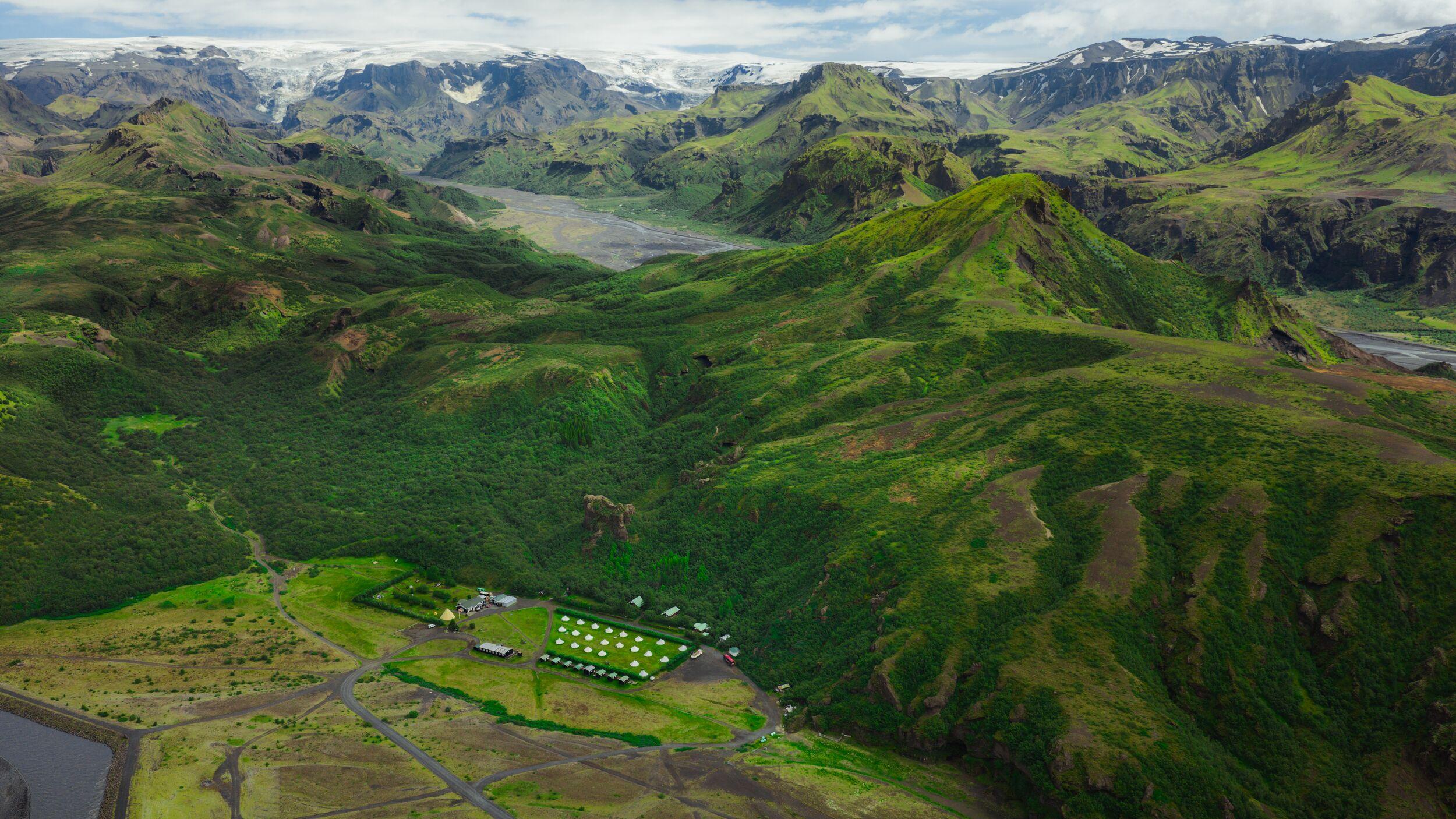
Þórsmörk
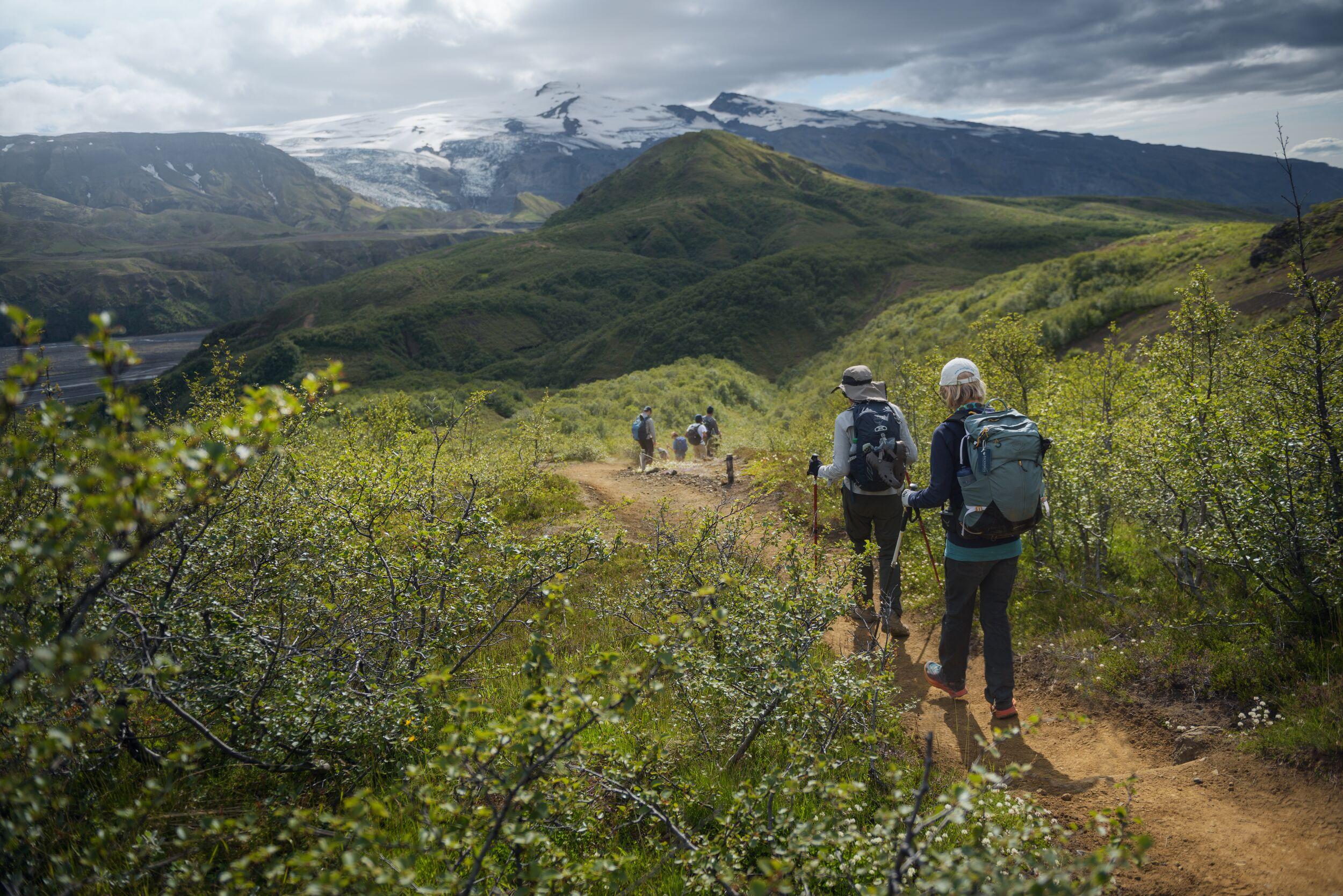
Þórsmörk is another place where the name tells you something about the landscape's cultural history.
The name can be broken down into Þórs, meaning “Thor's”, and mörk, meaning woodland or forest. So Þórsmörk means “Thor's forest”.
But you won’t likely find Chris Hemsworth wandering the area. The name refers to Thor, the Norse god of thunder, and reflects the area's connection with Norse mythology. Mörk is particularly interesting because Þórsmörk is known today for its birch woodland, which stands out in a country where natural forests are relatively scarce.
The name Þórsmörk brings together Norse mythology and the physical landscape. When you hike through Þórsmörk, with its valleys, rivers, glaciers and pockets of birch woodland, “Thor's forest” feels rather more descriptive than it might at first sound — it’s a powerful beauty befitting the god of thunder.
It is also a useful reminder that Iceland names do not always describe exactly what you will see at first glance. Some preserve older ideas about a place, while others reflect features that have changed over time.
Skaftafell
Skaftafell is an example of why literal translation is not always the end of the story.
The name is old, and its precise origin has been interpreted in different ways. It is associated with the historic Skaftafell area in southeast Iceland, now part of Vatnajökull National Park.
For hikers in Skaftafell, the important point is that names can outlive the original context in which they were coined. A place name can preserve a piece of local history even when the reason for the name is no longer immediately obvious.
Fjallsárlón
This name is easier to unpack.
Fjall means mountain, á means river, and lón means lagoon. Fjallsárlón is a glacial lagoon, and its name connects the lagoon with the mountain and river landscape around it.
You can almost read the map through the language.
Reynisfjara
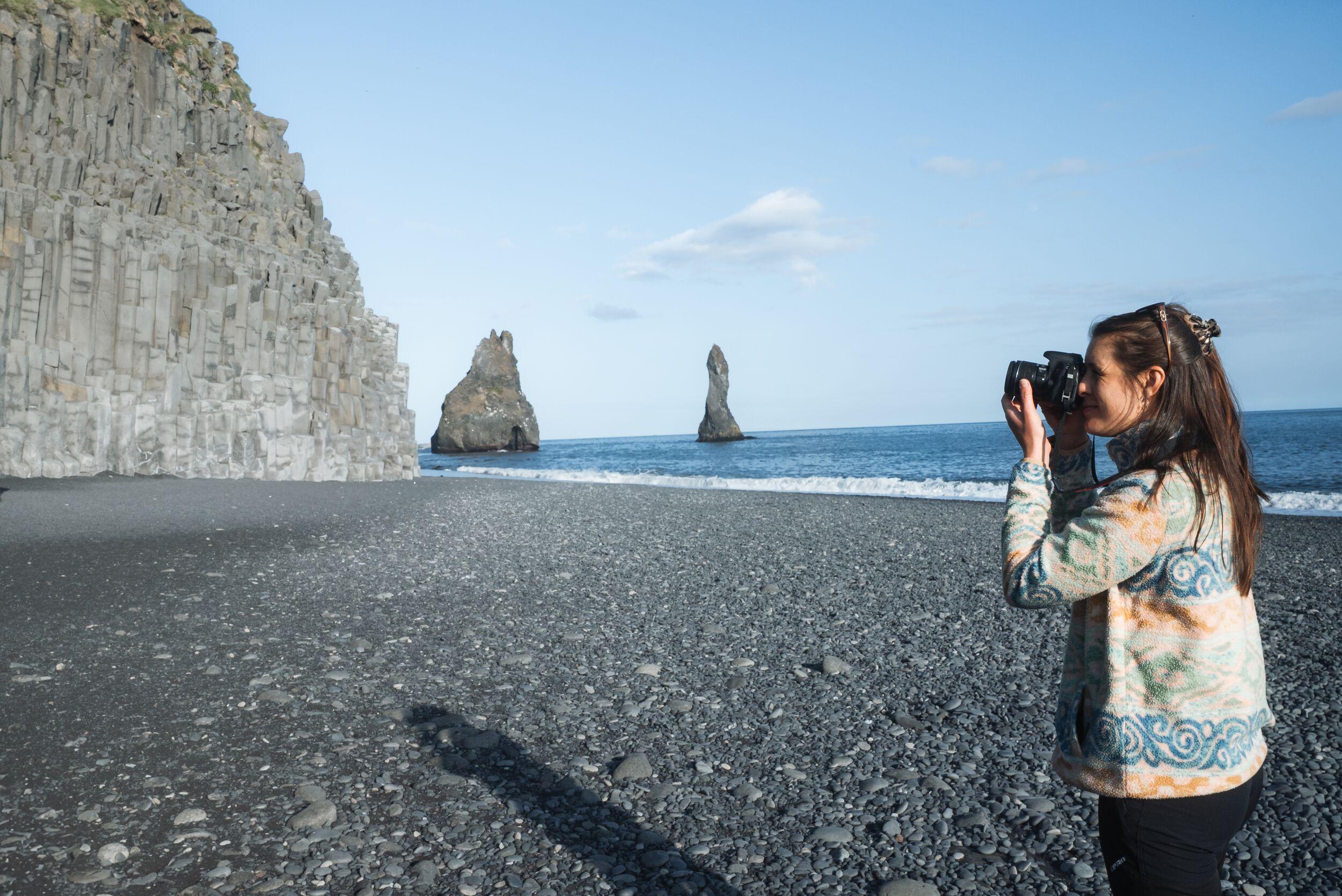
Reynisfjara is Iceland's famous black-sand beach near Vík, and a classic place to visit for those travelling Iceland’s south coast.
Fjara means beach or shore. The first part connects the name with Reynir, the nearby mountain and area. The name therefore helps locate the beach within its wider landscape rather than treating it as an isolated attraction.
It’s important to note that the name tells you nothing about whether the beach is safe. Reynisfjara is known for its potentially dangerous sneaker waves, so visitors should heed the many warning signs on site and stay well back of the water.
When hiking through this part of the Highlands, the name starts to feel less like a complicated word and more like a field note left by earlier travellers.
Why These Naming Conventions Still Matter
The practical nature of Icelandic place names has obvious historical value, but it also changes the way you experience the country today.
Once you recognise common Icelandic words, maps become more useful.
You start seeing:
- jökull — glacier
- fjall — mountain
- laug — warm pool
- á — river
- foss — waterfall
- dalur — valley
- vík — bay or cove
- fjara — beach or shore
- sandur — sandy or outwash plain
Suddenly, a long Icelandic word is not quite so mysterious. Instead it’s a helpful descriptor.
This is especially useful when hiking. A name can give you clues about the terrain before you even reach it — so don’t expend too much energy before approaching the fjall and be sure to pack a swimsuit and towel to enjoy a natural laug or two along the way.
Guided Hikes Through These Landscapes
Laugavegur Trek Classic (Huts)
Laugavegur & Fimmvörðuháls Combo Tour
4-Day Thorsmork Glacier Valley Hiking Adventure
Off the Beaten Path in Fjallabak Nature Reserve
Learn the Names, Read the Landscape
The next time you see a name like Eyjafjallajökull on a map, you do not need to pronounce it perfectly.
Start by breaking it down.
Look for the words that describe mountains, glaciers, rivers, valleys, beaches or warm pools. Then ask the more interesting question: why did the people who settled this area notice this particular feature?
Names tell us what earlier generations saw when they looked across the country. They record where people gathered, where they travelled, where they settled and what they considered distinctive. They preserve traces of Icelandic history, mythology and folklore while continuing to describe the landscape around us.
For travellers, this adds another layer to exploring Iceland.
Frequently Asked Questions
What do Icelandic place names mean?
Many Icelandic place names describe the landscape, from mountains and glaciers to rivers, waterfalls and valleys. Others refer to people, settlements, historical events or folklore.
Learning a few common Icelandic words makes even long names much easier to understand.
What does fjall mean in Icelandic?
Fjall means mountain. It is common in Icelandic mountain names and often appears in longer combinations, such as Eyjafjallajökull.
Once you recognise fjall, many Iceland names become easier to read.
What does jökull mean in Icelandic?
Jökull means glacier. You will find it in names such as Eyjafjallajökull, Mýrdalsjökull and Sólheimajökull.
It is one of the most useful words to recognise when exploring Iceland's glacial landscapes.
Why are Icelandic place names so long?
Icelandic place names often combine several descriptive words into one name. Rather than memorising the whole word, break it into smaller parts.
For example, Eyjafjallajökull contains words relating to islands, mountains and glaciers. Suddenly, the name starts to describe the landscape rather than looking like one impossible word.
What does Þórsmörk mean?
Þórsmörk means “Thor's forest” or “Thor's woodland”. Þórs refers to Thor, the Norse god, while mörk means woodland or forest.
The name suits the area, which is known for birch woodland surrounded by mountains and glaciers. Þórsmörk is also one of Iceland's classic hiking destinations, connecting the Laugavegur and Fimmvörðuháls routes.
Why are trolls associated with rocks in Iceland?
Icelandic folklore is full of stories about trolls living in mountains, caves and remote places. One well-known tradition says that trolls caught outside when the sun rose were turned to stone.
These stories became associated with unusual cliffs and rock formations. The rocks themselves were shaped by Iceland's geological forces, while the troll stories add a layer of cultural meaning.
Are Icelandic places named after Norse gods?
Some are. Þórsmörk, for example, is named after Thor, the Norse god of thunder. The volcanic craters Móði and Magni on Fimmvörðuháls are named after Thor's sons.
However, not all Icelandic place names have mythological origins. Many simply describe the landscape or preserve local history.
What does foss mean in Icelandic place names?
Foss means waterfall. It appears in many Icelandic place names, including Goðafoss, Skógafoss and Svartifoss.
It is one of the easiest Icelandic landscape words to recognise.
How are places named in Iceland?
Icelandic places can be named for physical features, people, farms, routes, activities, events or local traditions. Many names have been passed down through generations, while new geographical names can still be created today.
This makes Iceland place names an important part of the country's cultural heritage. A name can describe what you see, preserve something that happened there, or tell you how earlier generations understood the landscape.
Keep me informed about the Icelandic Mountain Guides Blog
Outdoor adventure in Iceland is our specialty. Subscribe to our free monthly newsletter to learn when to go, what to do and where to have the best adventures in Iceland.
Related Blog Posts
Related Tours
Laugavegur Trek Classic (Huts)
Laugavegur & Fimmvörðuháls Combo Tour
4-Day Thorsmork Glacier Valley Hiking Adventure